你的Coleco ADAM现在运行得怎么样?就是你1983年在玩具反斗城买的那台?
你没做?没多少人做。
20 世纪 80 年代初期是个人电脑爱好者的黄金时代。除了苹果和 IBM 之外,还有 Commodore、TRS-80、Osbourne、Timex Sinclair,甚至还有德州仪器 (TI)。当时还没有统一的标准或市场领导者,电脑对于业余爱好者来说,完全可以像史蒂夫·沃兹尼亚克那样,在自家车库里用电路和面包板搭建一台电脑。似乎所有曾经生产过电路产品的公司,很快都会发布他们最新的个人电脑。
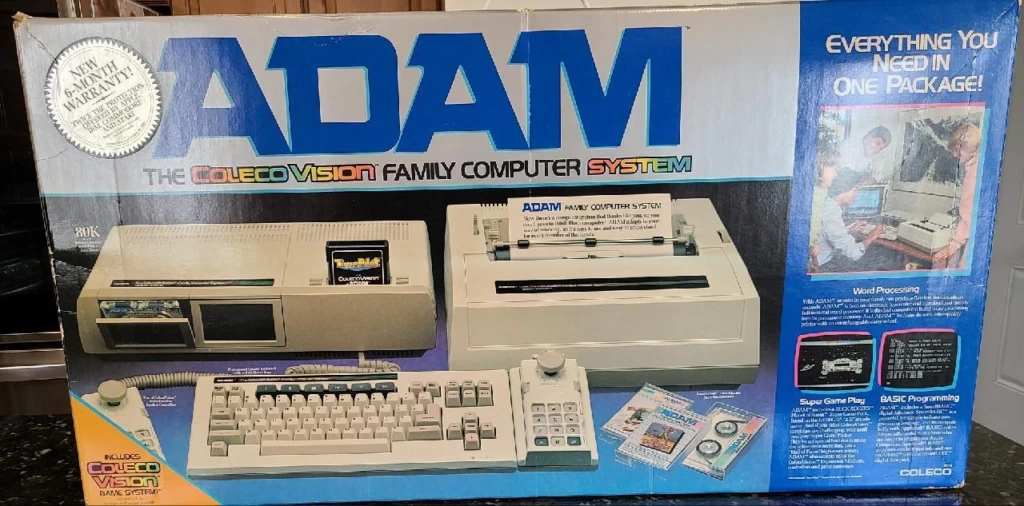
其中包括早期家用电子游戏系统(ColecoVision)的制造商 Coleco。许多早期系统都采用 Zilog Z80 处理器,这是一款 8 位处理器,于 1980 年上市。Coleco 的产品名为 ADAM,配备 64KB 内存,可选配软盘、磁带和打印机配件,内置键盘,并支持 256×192 分辨率的显示器,通常是用户自己的电视机。所有这些售价不到 800 美元!
不幸的是,ADAM 的制造质量很差。磁盘和软盘驱动器的可靠性极差,更糟糕的是,该设备启动时会发出强烈的电磁脉冲,经常会损坏附近的磁存储设备。Coleco 原计划生产 50 万套这样的系统,但在项目取消前,交付量不足 10 万套。到那时,超过 60% 的设备已被退回。Coleco 在这个项目上损失了 2.58 亿美元(按 1983 年的美元计算——相当于今天的 7.81 亿美元!)。该公司于 1988 年申请破产。
科尔科的故事本该就此结束。但十年后,我惊讶地发现竟然还有一群爱好者在使用他们的科尔科ADAM游戏机。其中一位爱好者在USENET上发表了一篇题为《科尔科ADAM的未来》的长文,随后又回复了一些问题,但我再也没能在其他任何地方找到这篇文章。
我很久以前就保存了一份,现在把它放在这里。它是……的混合体。
- 计算机发展史,从个人电脑的原始时代开始。
- 一篇令人尴尬的文章讲述了用户群组如何演变成无非是披萨聚会。
- 有些人似乎痴迷于维护他们的ADAM设备……甚至不惜开发PC接口,以便通过ADAM访问PC。至于为什么需要ADAM(为什么不直接使用PC?),这个问题却始终没有得到解答。
- 愤愤不平地抱怨说,Coleco ADAM 对于大多数人来说已经足够好了,而那些愚蠢的人却把钱浪费在更高级的系统上(比如,你知道的,内存超过 64KB 的笔记本电脑和台式电脑)。
- 那个社区里有一些关于诈骗和弃置软件的有趣故事。
享受!
Coleco ADAM 的未来
发件人:[email protected](Richard F. Drushel)
新闻组:alt.folklore.computers、comp.os.cpm、comp.sys.misc、comp.os.misc
主题:Coleco ADAM 的未来:ADAMcon 07 的主题演讲
日期:1995年7月27日 00:22:28 GMT
Coleco ADAM的未来:1995
理查德·F·德鲁舍尔的观点
在 ADAMcon 07 上
1995年7月20日至24日
加拿大安大略省滑铁卢
首先,我要感谢 Dale Wick 邀请我发表今年的“ADAM 的未来”演讲。其次,我向各位保证,虽然我拥有博士学位,并且从事生物研究,但我会尽量避免使用专业术语。第三,如果我接下来要说的话让您感到愤怒或不安,我在此提前致歉。第四,我要提醒各位,在接下来的半小时内,您很可能会在某个时候感到愤怒或不安。正如您将看到的,这既是必要的,也是有益的。第五,我要向各位保证,我来这里并非为了进行人身攻击,我也要向各位保证,我不会将你们的任何愤怒或不安视为对我的人身攻击。最后,我需要补充所有标准的免责声明:我所表达的观点仅代表我个人,并不一定反映大会组织者或 ADAM 社区其他任何成员的观点,等等。
本次讲座,我将首先简要介绍ADAM的发展历程。接下来,我将探讨ADAM硬件和软件的未来发展方向。最后,我将讨论一些社区关注的问题,并尝试将所有内容总结成几个要点。
一、历史。
今天在座的各位,许多人都是从 Coleco ADAM 国际社区创立之初就加入其中的。1982 年,你们拥有了一台 ColecoVision 视频游戏机。你们在电视上看过 ADAM 电脑的广告,1983 年圣诞节花了 600 美元买了一台 R59 ADAM,或许还因为开箱即坏而寄回去维修过。你们订阅了《Family Computing》和《Computer Shopper》杂志,因为它们刊登了 SmartBASIC 程序的列表。Coleco 破产后,你们加入了 NIAD(北伊利诺伊 ADAM 用户组)或其他用户组,或者自己创建了一个用户组。你们订阅了新闻简报,为新闻简报撰写文章,或者自己出版了新闻简报。你们购买了 ADAMlink 调制解调器,加入了 CompuServe,开始拨打 BBS 电话,或者自己创建了一个 BBS。你们开始与新闻简报中提到的那些人进行电子交流。你们见证了 Eve Computer Systems 的兴衰,也见证了 Orphanware Business Systems 和 Micro Innovations 的创立。你见证了所罗门·斯威夫特的崛起和陨落。你参加了1989年的首届ADAMcon大会。你见证了所有重要的“第一”。
然而,我接触ADAM的时间比较晚,加入ADAM社区的时间就更晚了。让我简单介绍一下我与ADAM的渊源。我的第一台ADAM是我父亲的,一台R59,是1984年圣诞节买的,还配有160K的软盘驱动器。1988年,他受够了软件bug,买了一台Tandy 1000 PC兼容机,才把这台ADAM从垃圾堆里捡回来。父亲在NIAD成立的第二年就加入了,但一年后就放弃了NIAD和ADAM,因为NIAD的SmartBASIC程序总是导致他的系统崩溃。我续订了NIAD的会员(主要是为了他们的产品线,我并没有太关注他们的文章)。我买了新版的SmartBASIC 1.0、一台R80控制台、一台额外的磁带驱动器、一台松下打印机,以及两本《ADAM黑客指南》。我最初购买ADAM的目的是将其作为家用文字处理器:当时我刚开始读研究生,需要处理大量文书工作,而我们实验室只有两台电脑,而且总是处于繁忙状态。当我发现可以使用Norton Utilities软件在PC 360K硬盘上读取160K ADAM磁盘的数据块时,我便萌生了编写PC程序来复制ADAM文件的想法。这促使我深入研究PC和Z80汇编语言,最终甚至反汇编了ADAM的EOS操作系统和SmartBASIC。后来,由于学业繁忙,我无暇顾及ADAM,而且很明显,我根本无法快速修复足够的bug,也就无法利用ADAM进行有效的实验工作(这才是我的初衷)。1989年初,在ADAMcon 01召开之前,我退出了NIAD,此后直到1990年秋季,我才再次与ADAM的广大用户接触。那时,我开始撰写博士论文。完成论文后,我买了一台内置2400波特调制解调器的笔记本电脑。我在克利夫兰自由网络(Cleveland Freenet)上注册了一个账号,并找到了ADAM签名组,系统管理员正是我们自己的Herman Mason Jr.和George Koczwara。当他们发现我只借助了《黑客指南》(Hacker's Guide)系列书籍的少量帮助,就已经对EOS和SmartBASIC有了相当深入的了解,并且看到了SmartBASIC 1.x的初步版本时,他们意识到我做了一件别人都没做过的事情,而且很多ADAM用户都能从中受益。通过他们的BBS和人脉,他们让我重新融入了ADAM社区。正是因为他们,我今天才能站在这里。
我之所以要讲述我个人参与ADAM的经历,是为了强调,与你们这些先驱者相比,我是一个后来者,甚至可以说是局外人。我相信这赋予了我某种独特的客观性,但我在ADAM大家庭中资历尚浅,可能会让你们中的一些人难以接受我接下来要说的话。
二、硬件。
我知道我在 ADAMcon 06 上提到游戏卡带、磁盘驱动器和 ADAM 系统主板上的只读存储器芯片寿命有限时,让不少人感到惊讶和担忧。ROM 和 EPROM 的平均故障间隔时间 (MTBF) 为 10 年。这种故障属于单比特错误:某个地方的 1 变成了 0,或者 0 变成了 1。鉴于 ADAM 至今已有 12 年历史,ColecoVision 也有 13 年历史,我们应该预料到会出现一些不稳定的游戏卡带,或者 ADAM 的 SmartWriter 出现一些难以察觉的错误(因为 SmartWriter 存储在 EPROM 中),甚至 ADAM 会频繁崩溃(因为 OS7 和 EOS 操作系统都存储在 ROM 中)。我们无法预测这些单比特错误会在何时何地发生,而且即使发生了,也可能不会造成明显的损坏。例如,如果错误发生在内部消息字符串中(例如隐藏的程序员姓名或“嗨,凯西”消息),则不会产生任何影响。但是,如果错误发生在菜单字符串或屏幕数据区域中,则可能会表现为 SmartKey 菜单损坏,或者屏幕显示的一部分出现一些乱码;但除此之外,正常操作不会受到影响。当然,最糟糕的情况是代码段中的错误——实际的机器代码会变成不同的指令,导致完全无法预测的结果,然后程序就会出现故障。想象一下 SmartBASIC 下 EOS ROM 例程 _WRITE_BLOCK 中出现此类错误会造成什么后果:您可以加载并运行磁带或磁盘上的现有程序,但无法保存任何内容,因为 _WRITE_BLOCK 例程本身已损坏。
6801 微控制器内部还存储着 ROM 代码,用于控制磁带驱动器、键盘、打印机以及 ADAMnet 本身的运行。随着时间的推移,这些 ROM 代码也会出现单比特错误,任何故障都会造成灾难性后果:磁带驱动器损坏、打印机损坏、ADAM 系统损坏。
ADAM 开始出现故障……真是令人担忧。幸运的是,我们现在就可以采取一些措施,防止 ADAM 出现这种隐蔽的单比特错误。市面上有一些设备可以读写标准的 ROM 和 EPROM;这些设备很常见,价格也相对便宜(大约 150 美元),空白的 EPROM 也是如此(每个 2 到 5 美元)。策略是,趁 ROM 还完好时,读取所有 ROM 并保存数据;当其中一个损坏时,用保存的数据重新编程一个新的 ROM,这样就可以再用个十年左右。对于 EPROM(E 代表可擦除可编程只读存储器),你甚至不需要购买新的 EPROM——只需揭开它的小石英窗口(通常被标签覆盖),用强紫外线擦除数据,然后重新编程即可。
然而,对于 6801 微控制器来说,更换就比较复杂了。6801 的程序在出厂时就已经内置,无法更改或更换。虽然有 6801 的 EPROM 版本 68701,但 (a) 它价格昂贵,大约 25 美元;(b) 68701 的读写器比标准的 EPROM 烧录器贵得多,大约 500 美元;(c) 它与 6801 的引脚并不完全兼容,因此不能直接将 68701 插入 6801 的插座,需要额外的跳线连接。
最后,更换芯片时还会出现一个棘手的问题:故障芯片可能不是插座式的,而是直接焊接在电路板上的。在这种情况下,您必须先拆焊旧芯片才能安装新芯片(最好是插座式的,以便下次更换)。拆焊一个40引脚的芯片并非易事,因此一般ADAM用户可能需要付费请专业维修人员来完成这项工作。我从未见过带有插座式ROM的游戏卡带。EOS和SmartWriter的ROM和EPROM都是插座式的。6801微控制器有时是插座式的,有时则不是。
这其中涉及版权问题,但如果我们能建立一个集中存储的EPROM和6801二进制文件的库,那当然很好。这样,当你的SmartWriter ROM或《Cabbage Patch Kids Adventure In The Park》游戏卡带损坏时,就能找到一个已知的可用副本进行修复。拥有相应硬件的人可以烧录新的EPROM,并监督用68701替换故障的6801微控制器。这或许是ANN可以协调的工作,与现有的ADAM维修服务部门合作,或者像我这样已经拥有部分必要设备的硬件爱好者也可以参与。或者,ANN可以购买必要的设备作为公共产品,并指定专人操作,以成本价(即非营利)向所有ADAM用户提供服务。先提醒一下,稍后我会详细讨论盈利问题。
如果你的ADAM打印机在未来几年内没有出现故障,那么它的一些外围设备很可能会开始损坏。部分原因是老化,但Coleco公司糟糕的硬件设计加剧了老化的影响。所有部件都没有风扇散热,运行温度很高。你可以试试在ADAM打印机运行一小时后触摸其背面的大型铝制散热片,或者触摸一下磁带驱动器中存放的数据包。最糟糕的是最初的160K磁盘驱动器——由于设计粗糙,电源电路严重过载,某些元件甚至可以烧开水。化学原理告诉我们,温度每升高10摄氏度(即18华氏度),化学反应速率就会翻倍。这意味着,如果将硬盘驱动器的某些部件保持在更合理的30摄氏度(即86华氏度)的低温下,其损坏速度将比现在快约128倍。从这个化学入门知识中我们能学到:如果你想让你的ADAM硬盘驱动器尽可能延长使用寿命,就应该保持其低温运行。风扇和空调房效果最佳,但凉爽的地下室也可以。
当你的某个外围设备坏了怎么办?Howard Pines 和其他一些人可以帮你维修。由于完整的 ADAM 系统现在还能以不到 50 美元的价格买到,你可以考虑去当地的 Goodwill 或跳蚤市场淘一个(或两个)备用 ADAM。我敢肯定附近肯定有备用的 ADAM 出售 :-) 这样你就能多一个键盘、磁带驱动器、打印机和主机;在你把原来的 ADAM 送去维修期间,你可以使用备份。Coleco 的磁盘驱动器非常难找,所以如果你有机会买到,一定要抓住机会。至于第三方硬件,你可能需要找人帮你修理。George Koczwara 和我愿意修理 Orphanware 的产品,而且我相信 Mark Gordon 仍然会修理 Micro Innovations 的产品。由于除了 Orphanware 的串口板之外,所有第三方硬件现在都已停产,所以无论价格如何,你都很难找到这些硬件的替代品。
由于ADAM硬件年代久远,部分组件稀缺甚至无法获取,因此您应该担心一旦其中任何组件损坏该怎么办。对于那些坚持使用ADAM基础系统并考虑升级到磁盘驱动器、并行打印机、串行调制解调器甚至硬盘的用户来说,组件的稀缺性和老化是巨大的障碍——您根本买不到所需的组件;即使找到了,由于稀缺性,价格也十分昂贵;而且如果您投入巨资,它也可能因为老化而报废,让您白白损失一笔投资。这种情况足以让最忠实的ADAM拥趸也放弃ADAM,转而购买PowerPC或奔腾处理器。
技术可以帮助解决ADAM硬件稀缺、老化的问题,但成本可能很高。让我们来探讨一下ADAM未来几种可能的硬件发展方向。
我们可以制造和旧硬件一模一样的新硬件。我们也可以设计并制造性能更优的新硬件——比如SCSI接口、24位彩色图形或16位立体声?我们可以重新设计ADAM系统板,使其采用25MHz的Z380 CPU和16MB内存。我们还可以开发某种“ADAM卡”,将其插入PC兼容机的扩展槽。这些想法是否让你感到兴奋?马克·戈登曾表示,如果有人愿意支付足够的费用让他进行设计,并且*其他人*愿意投资进行实际的制造、销售和支持,他非常乐意去做这些事情。但这绝非易事。现在你有多兴奋?
马克·戈登是个商人,而商人想要盈利。考虑到设计和调试一款新硬件,甚至是根据授权生产现有设计,都需要高昂的启动成本,我认为ADAM硬件不会再有大规模的新产品问世,因为ADAM硬件已经无法盈利了。如果没有至少20个人愿意全额预付,你甚至连收支平衡都做不到。我们这里几乎没有人能够承受这种经济损失,仅仅为了ADAM社区的“更大利益”而去做这件事。
这并不是说ADAM硬件开发就此停止。像Chris Braymen、Dale Wick或者我这样的人会不时推出一些新产品;但这些都只能是DIY项目。如果你想要一台,你需要自行负责从JDR购买组件、自行布线并进行测试。如果你不擅长技术,或许可以找到人以成本价或象征性费用帮你组装一台;但没有人会批量生产50台现成的ADAM出售。现在是1995年,不是1986年(据说,在1986年,Orphanware Business Systems的硬件销售额就能超过几万美元)。残酷的现实是,在1995年的ADAM社区,市场规模不足以支撑想要盈利的商人进行投资。
对一些人来说,另一个令人不快的现实是,许多 ADAM 用户已经转而使用其他电脑,最常见的是 IBM PC 兼容机。但我实际上认为这是一个意想不到的好处,ADAM 用户可以利用这一点。现代 PC 配备了大容量硬盘和磁盘驱动器、高分辨率显示器、串行端口、并行端口,还可以连接鼠标、CD-ROM 驱动器、磁光盘驱动器、扫描仪等等,应有尽有。一台如今被视为废品的普通 80286 PC,其外围硬件配置通常比配备所有第三方扩展功能的最先进的 ADAM 还要多。即使是入门级的 IBM-PC/XT 也配备了 20MB 硬盘、360KB 磁盘驱动器、并行端口和串行端口。而且 PC 价格低廉,有些甚至几乎和一套完整的裸 ADAM 系统一样便宜。而这些硬件的 ADAM 专用版本,即使存在,也十分稀少且价格昂贵。一块Micro Innovations 1.44兆字节的软盘驱动器在还能买到的时候售价将近300美元;同样的价钱,我可以买到一台二手的IBM 286电脑,它配备了1.44兆字节和1.2兆字节的软盘驱动器,外加一块40兆字节的硬盘。考虑到提升计算能力所带来的经济利益,乍一看,PC显然比ADAM更胜一筹。但是,如果我能让我ADAM使用我PC的高级硬件,那么我或许会更有动力继续使用它。这就是为什么我认为PC兼容机的引入对ADAM社区来说是一件好事,因为(此处略带自夸)我已经开发出一种让ADAM使用IBM硬件的方法。我称之为ADAMserve。
正如许多人在我的演示中所看到的,ADAMserve 的基本原理是让 ADAM 通过串口与 PC 通信。每当 ADAM 需要访问磁盘、磁带或打印机时,它无需查找真正的 ADAMnet 磁盘、磁带或打印机,而是请求 PC 查找其自身的磁盘或打印机。PC 硬件完成所有工作;它为 ADAM 提供“服务”(因此得名),并通过串口将结果返回给 ADAM。ADAM 操作系统软件经过重写,因此您的应用程序不会察觉到它们使用的并非“真正的”ADAM 硬件;这种切换对用户完全透明。由此延伸,任何可以连接到 PC 并传输数据块或字符的设备都可以被 ADAM 有效地使用,就像它是 ADAM 自身的设备一样。当然,您需要一块真正的 ADAM 串口板才能建立通信链路;但串行板很常见(事实上,HLM-GMK 仍在生产 Orphanware 型号的串行板),而且串行板是您*唯一*需要的非 Coleco 硬件。一台裸机(仅配备一个磁带驱动器)的 ADAM,只要配备串行端口和 ADAMserve 软件,就可以使用 PC 的硬盘、磁盘驱动器、并行端口和串行端口以及实时时钟。如今,收集与 ADAM 硬件功能完全兼容的硬件是一项既困难又昂贵的任务。ADAMserve 旨在免费提供,只需支付分发介质的费用——您只需提供 PC 和串行板即可。
由于市场不足以支撑大多数 ADAM 专用硬件的生产,而且许多人已经拥有具备先进硬件功能的 PC,我认为像 ADAMserve 这样的产品将是普通 ADAM 用户升级和替换因老化而损坏的原始 ADAM 外设的唯一希望。
三、软件。
与硬件一样,在考虑ADAM软件的未来时,创新和维护这两个问题都至关重要。幸运的是,这意味着我对软件的论述可以比对硬件的论述更简洁:-)
创新意味着编写满足ADAM社区特定需求的新软件。维护则意味着无论硬件或操作系统如何创新,都要保持现有应用程序的运行,并修复现有问题。由于经济激励机制对软件和硬件同样适用,我预测,从现在开始,ADAM将很少或几乎不会有新的应用程序问世,代码维护和修复一些小错误将成为一项必要但却被忽视的工作,最终只能由我们当中仅存的少数程序员来完成。我认为这很可惜,但除了游戏之外,ADAM软件库中实际上并没有任何软件类别迫切需要新的程序;目前已经有足够的选择。在EOS方面,文字处理软件有SmartWriter和SpeedyWrite;图形处理软件有PowerPaint;数据库软件有SmartFiler;电子表格软件有ADAMcalc;电信软件有ADAMlink V;编程软件有SmartLOGO和多种SmartBASIC版本;音乐软件有VideoTunes以及Chris Braymen开发的任何MIDI接口软件。在 CP/M 和 TDOS 方面,除了图形和音乐之外,其他所有类别都有很多不错的选择,因为 CP/M 和 TDOS 都是基于文本的操作系统。即使某些类别中没有完全符合你需求的选项,也不太可能有人会花一年时间为你编写一个完美的版本——除非你动力十足,对 ADAM 的内部机制了如指掌,并且自己动手编写——因为除了赞扬和无私利他行为带来的成就感之外,没有任何其他回报。
还要考虑剩余ADAM软件供应商的困境。他们囤积着当年以全价购入、销售前景尚可的软件。随着ADAM社区规模的不断缩小,剩余的活跃ADAM用户往往拥有越来越多的软件,这些软件都是在ADAM系统清算时获得的。而那些留下的用户可能已经拥有了供应商想要出售的软件副本。这些库存几乎无法出售,供应商也永远无法弥补损失。因此,供应商几乎没有动力再将更多滞销软件添加到他们停滞不前的库存中,这进一步限制了新程序的市场。
目前,新的ADAM软件只能出于某人的善意而诞生,或者作为某些需要驱动程序的新型ADAM硬件的必要组成部分。任何认为能够收回成本(或许只是介质和邮寄费用)的人都会大失所望。你无法按软件本身的价值出售它,无论是它对ADAM社区的内在价值(因为它是一项重大改进),还是它对你而言的价值(因为你为此辛勤工作了一年才使其运行)。如果你想让尽可能多的人使用它,你唯一的真正选择就是免费赠送。鉴于ADAM社区的萎缩,愿意用金钱支持新软件的人数也在减少。我们这些程序员时不时会希望情况并非如此。就我个人而言,我每份SmartBASIC 1.x的10美元利润(扣除介质和印刷费用后)都用来购买ADAM硬件,以便我能够通过我的软件更好地支持它。自 1991 年 SmartBASIC 1.x 推出以来,我一共卖出了 40 多份。其中大概有 25 份是在头两年卖出的,第三年卖出了 10 份,之后零星地卖出了一些。最近几年,作为 ADAMcon 的奖品送出的比卖出的还多 :-) 如果 SmartBASIC 1.x 在 2007 年 ADAMcon 上是新品,我估计在大会上能卖出 5 份就不错了,接下来一年能卖出几份,之后的“新品”也只能作为 ADAMcon 的奖品了。就算印 10 份手册,我也连复印成本都收回不来。
1995年,如果你像我一样是一名活跃的ADAM程序员,你不可能指望靠它赚钱——到现在,根本赚不到钱。我之所以成为ADAM程序员,是因为我本身就对ADAM很感兴趣。我写软件是为了*我自己*,如果其他人觉得有用,那当然很好,但无论别人是否关心我做什么,我都会继续写下去。对我来说,学习ADAM的工作原理以及如何让它做一些有趣的事情,是一件*很有趣*的事情(尽管常常充满挑战和挫折)。
遗憾的是,我在ADAM社区里没找到多少像我一样的人。由于各种个人和职业原因,我们这些程序员已经所剩无几了。*我*认为,学习用SmartBASIC甚至汇编语言编写自己的软件并不需要博士学位,但*你们*中的大多数人却不这么认为;而我无法改变你们的这种想法。自己编程有很多实际的好处,其中最重要的一点就是你可以让程序完全按照*你*的意愿运行。然而,如今更重要的是,ADAM编程技能可以成为你维护工具箱的一部分。如果所有的ADAM新闻简报都消失了,所有的ADAM BBS都离线了,ADAM大会也不再举办,而且你找不到任何其他拥有ADAM的人,那么你就像鲁滨逊·克鲁索一样,可以在自己的荒岛上自给自足。对我来说,这是一个重要的动力——因为我真的很担心 ADAM 即将变成一座荒岛。
四、社区。
自 1989 年以来,一年一度的 ADAMcon 大会一直是 Coleco ADAM 用户社区的盛会。ADAMcon 04 的参会人数达到顶峰,超过 100 人,但 ADAMcon 05 的举办受到地理位置的限制,而地理位置和国际经济形势又使得许多原本热情高涨的加拿大人无法参加 ADAMcon 06。05 和 06 之间长达三个月的间隔使得人们的兴趣难以持续,而随后匆忙安排在 7 月份再次举办 ADAMcon 07,我确信,这给 Dale、Jill 和其他大会组织者带来了后勤方面的难题。至于 ADAMcon 08 的前景,目前仍不明朗。
ADAMcon 是为 ADAM 社区提供的一项公共服务。它们并非以盈利为目的,但必须收支平衡。为了实现收支平衡,参会人数必须达到一定规模。为了让筹划和举办 ADAMcon 的投入物有所值,无论是对某些人还是对某些用户组而言,参会人数都应该略高于最低要求。但我并不确定期待高参会人数是否合理。目前已有证据表明,资金不足以支持新的 ADAM 硬件和软件开发。那么,再举办一次 ADAMcon 的吸引力何在呢?不会有什么新内容,会议内容也几乎一成不变,ADAM 前五年的大多数知名人士都已转战其他领域,因此,那些喜欢与业内大佬们交流的人,最终只会遇到像我这样的后起之秀。除非这是你第一次或第二次参加ADAMcon,否则一切都像穿旧鞋一样熟悉,只是城市和酒店不同而已。花250美元买一个换了面包的同一款汉堡真的值吗?
嗯,肯定是这样,不然你们怎么都来了 :-) 除非你是第一次参加ADAMcon,像我一样在2004年ADAMcon上才发现ADAM的世界,否则你肯定得承认,ADAM本身只是你今年来参加的一个牵强的借口。你来这里的真正原因是社交。在之前的ADAMcon上,或者通过现在已经停刊的简报,或者通过现在已经关闭的BBS,你结识了一些后来成为朋友的人。ADAM最初把你们聚在一起,是为了一些具体而实际的目的(比如,你写了一些我想买的软件),但现在ADAM的联系已经成为了一种历史遗迹。有些人即使没有ADAMcon,即使你以后不再使用ADAM,也会保持联系。这没什么错;我只是想指出这一点,以便在未来ADAMcon的规划中(如果还有的话)加以考虑。
在不久的将来,或许一两年后,甚至可能就是现在,ADAM社区的资金支持将不足以支撑举办另一届ADAMcon大会。这是不可避免的;ADAM社区已经停止增长。看看你周围人的年龄就知道了。增长源于年轻一代,而如今,ADAM对12岁的电子游戏小天才或初露锋芒的电脑极客来说已经没什么吸引力了。与目前市面上其他电脑和电子游戏设备相比,ADAM和ColecoVision已经被彻底超越。这种情况在20世纪90年代初并非如此,当时IBM-PC兼容机上声卡和高分辨率彩色图形还相对少见,世嘉和任天堂的游戏版本与ColecoVision版本也相差无几。但如今,如果你还是个孩子,除非有人送你一台ADAM,或者你的父母或祖父母已经有了,否则你甚至都不知道ADAM的存在;当你用邻居的奔腾电脑玩过《毁灭战士》之后,像《汉堡时间》甚至《间谍猎手》(我最喜欢的游戏卡带)这样的游戏都会显得很逊。
In his Future of the ADAM speech at ADAMcon 04, Rich Clee talked about the need to match people with ADAMs. Don't let people be tricked into buying expensive PCs if all they really need is an ADAM with SmartWriter. It would be nice to do this, but marketing hype conquers all. Something is wrong when you need a Pentium and a laser printer to write a simple letter, and when the word processing program takes 20 megabytes of hard disk space and 8 megabytes of memory. But like it or not, those are the standards of today. If it doesn't have scalable, proportional fonts and the ability to include fancy graphics, nobody wants it, even if they don't really *need* those features. Worse, however, once all the nifty features are available, people will use them, become dependent upon them, and never again conceive of doing their jobs without them. At that point, the game is over. For contrast, Wordstar 3.3 for CP/M is a 23K .COM file on a floppy disk, and runs in 64K of memory, but unless you have a daisy-wheel printer, it won't “look” as good as the laser- printed version, and it will take 10 times longer to print out. The floor has risen beyond what the ADAM can provide, I think needlessly so, but I can't win this argument with Bill Gates, the president of Microsoft Corporation, who's laughing all the way to the bank.
Consequently, I now believe that the ADAM has ceased to be a computer that people would use to perform real work, as their system of choice, if they had access to more modern machines. All the EOS software for doing real work, like SmartWriter, SmartFiler and ADAMcalc, is more a “toy” than a productive tool. “Gee, I'd never have thought you could do that on an ADAM, but my Mac does it better and faster.” The CP/M software has a wider usage, because there have been many other computers besides the ADAM which run CP/M, but it too isn't going to be found in today's offices and businesses.
If the ADAM is no longer a viable tool for today's computing needs, why do you bother with it any more? Part of the answer is inertia–you've invested so much time and money into it, you're in too deep to give it up. Another component, as mentioned above, is social–you've met some dear friends with the ADAM as a catalyst, and thus you have an emotional attachment to the ADAM. In my own case, have found the ADAM to be an ideal environment for learning about digital electronics and computer programming. But I am a rare minority in this.
Inertia and socializing are not sufficient, in the long run, to insure the growth of any organization, let alone maintain its status quo. The best evidence I can give of this is my own users group, BASIC (Best ADAM Support In Cleveland). Our monthly meetings, held in my basement, begin happy and sociable, but when it's time to talk about the ADAM, it gets quiet. With few exceptions, nobody has done anything with his ADAM since the last meeting, nobody knows what he wants to do with it today, nobody says except in vague terms what he wants the group to do next time. If someone creates a structured agenda, there is little interest. Nobody seems interested in learning anything new. Soon, talk turns to what people are doing on their PCs at home, we break up and most go home. Those who stay usually are having hardware problems, which are diagnosed and repaired if possible. Those who are left after that eat pizza, and I'm usually left wondering why we're bothering to have these meetings, except to collect dues for the annual Christmas dinner and to eat pizza once a month.
In the case of BASIC, there is blame on all sides for our current state of affairs. But I would argue that the lack of a desire to learn new things is the primary difficulty we face. Since ADAM software in general often isn't as user-friendly as more modern software, and since the ADAM has its own hardware quirks, it *will* be harder to learn to use than the average Mac or PC running Windows. Given the economic realities I've talked about previously, this will never improve. Thus, the average ADAMite will not be able to wait passively for someone else to work out all the bugs and kinks–he has to learn enough to do that himself. Since this will require effort, if he isn't internally motivated enough to do this, he might as well be honest with himself, put his ADAM in the attic, and have done with it.
V. Synthesis.
I came into the ADAM community as a public person at ADAMcon 04. While this represents the peak of ADAMcon attendance, probably this was on the downside of the peak of the ADAM community in general. The Solomon Swift debacle, which was before my time, seems to have been the first breach of trust. Since then, everything has been downhill. The catfight over FidoNet versus ADAM BBSes broke up the telecommunications links which had previously kept ADAMites in contact, and created hostilities which still persist. Important resource people like Tony Morehen and Guy Cousineau found better things to do with their lives and moved on, leaving a void of programming experience. One by one, the hardware vendors went out of business. People stopped writing new ADAM software because there was no money in it. PCs and Macs got less expensive and became more powerful than ADAMs, inducing ADAMites to gravitate to where the action was, so to speak. And soon, CompuServe will move to an all-new graphical user interface, like Prodigy and America OnLine, which can never be accessed from an ADAM, so ADAM and all the other 8-bit microcomputers will be swept aside as insignificant–as nowadays they are, in dollar terms. When this happens, the last great connecting link for the ADAM community will be broken, and ADAM will be without a large-scale electronic voice.
For those of us who choose to remain with the ADAM in some capacity, it may be painful to confront these realities. That's why I warned you at the outset that I might say things which would make you angry or upset. But confront them we must, if we wish to maintain some semblance of an ADAM community. Rich Clee's ADAMcon 04 dream of an ADAMcon 0E (that's 14 in hexadecimal) seems quite improbable to me now, but it will certainly be *impossible* if the status quo is allowed to continue.
Our best shot at changing the status quo is to consciously change our group philosophy from advocacy to maintenance. It doesn't matter how many good reasons we can think of for why people should be using ADAMs instead of PC clones–the uninitiated are not interested, and telling us over and over is just preaching to the choir. We've lost, get over it, and move on. Circle the wagons and concentrate on taking care of the people who are already here. If we can't win globally, we should at least win locally. If a lost ADAMite stumbles across us, fine–welcome to the fraternity, we'll take good care of you. But we can't afford to launch expeditions into the wilderness to find all the lost ADAMites.
I realize that, with the loss of ADAM advocacy, vendors are effectively being told to eat their inventories–new, lost ADAM users are more likely to buy hardware and software than veterans of 4 or 5 ADAMcons, and no new users means no sales. I can't, however, change this fact: in 1995, there is no way to make a living solely from the ADAM community. Terry Fowler is trying it, and he claims he's doing it, but I have my doubts. Ask Rich Clee how fast his inventory is moving; ask Herman Mason and George Koczwara how brisk their sales are. At this point, these gentlemen can't be in it for the money (unless they are deluded); they are basically providing a public service out of the goodness of their hearts, which they will continue to do as long as they can (mostly) break even.
Maintenance philosophy means anticipating problems before they occur. Picking up a spare ADAM system is good preventive maintenance. Getting an account on your local Freenet, if you live near one, is another: when CompuServe becomes unusable by the ADAM, you can still send and receive Internet E-mail, and keep in contact with other ADAMites who are on the net. Learning how to program the ADAM, first in SmartBASIC, then in assembler, is a vital maintenance skill: if you get cut off from the rest of the world, you can do your own troubleshooting, and you'll always be able to write your own software, and thus, your ADAM will always be able to do what *you* want it to do. Remaining active users groups and ANN can coordinate repair services, software libraries, and technical support, and can make necessary technical information available.
Think about your ADAM as if it were a 1957 Chevy convertible. It runs, and on sunny summer days you drive it around to show it off. It's a great car, and you could probably drive it back and forth to work every day, but if anything broke, it would be murder finding parts, or a garage with the experience to fix it. So, you don't take too many chances; it stays covered in the garage most of the time. You join a car club, learn how to do tuneups, how to change points and plugs, get reprints of the shop manual, and learn as much about the car as you can. You become your own expert, and teach others what you know, just like others taught you. This requires energy and activity; if you aren't interested in maintaining it yourself, and if you aren't rich enough to pay somebody to do it for you, you'd better stick with a more modern automobile. There is no shame in that, but you have to be willing to admit to yourself and to everybody else that you don't want all the trouble.
For me, the prime intellectual attraction of the ADAM is that it's a closed universe with definite limits: since it's a commercially dead architecture, it isn't changing very much, and it stays put long enough so that you can, in principle, learn everything there is to know about it. It has interesting complexities, yet it is simple enough that you can carry almost the entire machine and operating system around in your head. You can teach it to yourself without trying too hard. Compare this to a modern IBM-PC clone running MS-DOS and Windows. Both the hardware architecture and DOS have stayed remarkably constant since 1981, so what you learned about the original PC/XT way back then is still mostly valid for a Pentium, and you've had 14 years to assimilate it all. The Windows operating system, however, is so huge and complicated that it takes 10 tedious, highly technical reference books from Microsoft to *begin* to explain it; and after late August, you can throw them all away, because the new Windows '95 introduces a host of changes and incompatibilities. Unless you are a professional programmer and paid to look at those manuals all day, you have no hope of ever mastering their contents. As amazing as it may sound to you avowed non-programmers out there, ADAM programming can be fun, even though Windows programming is always terribly hard work.
I warned you at the outset of this speech that I would probably make you angry or upset, but that this was both necessary and good. It was necessary because these strong emotions are about the last motivating force we have left to get ADAMites off their duffs. Here is your wakeup call: the end of ADAM may be inevitable, but how soon that end comes is directly under the control of every person sitting here tonight. Each of you is free to junk his ADAM and move on, no hard feelings. But those of you who choose to stay can't stay through intertia. You don't have the luxury of passively waiting for other people to do things for you–you need to boost your own activity level. Why do you think that ADAMcon 07 is “The Year To Bond”? If we want to continue to have some semblance of an ADAM community, we'd better start bonding, banding together to save our community, or it *will* disappear. The good which I want to come out of your feelings of depression about the current state of the ADAM community is that you'll get inspired to become more active in your users group, inspired to start learning how to be self- sufficient with your ADAM, and inspired to share what you know with the people in this room.
Whether an ADAM community persists or not, *I* will still have fun with my ADAM, if only to please me myself. Despite all the gloom and doom I've been spouting up here, I want you to remember that the ADAM is *fun*. It's fun for *me*. ADAM isn't a tool any more, it's a hobby; so we can all lower our expectations. It doesn't have to be efficient, it doesn't have to be fast, because we're not basing our livelihoods upon it–it just has to be interesting.
Since I find it interesting, and I find all of you interesting and friendly, I have a personal stake in seeing the ADAM community last for a long time. You've heard about World War I army platoons which bought cases of champagne in 1918 and agreed to meet every year to drink a bottle to the health of the survivors and to the memory of the fallen. Every year the attendance gets smaller, and finally the year comes when there is just one old soldier and one last bottle. “Here's to ya, lads,” he says, raising his glass to a room full of ghosts. I don't want to be that last man. I don't want this to be my last glass. I don't want this to be the last year for the ADAM.
But even if it is, I will still say, “Here's to ya, lads.”
Richard F. Drushel, Ph.D.
ADAMcon 07, 23 July 1995
Richard F. Drushel, Ph.D. | “Aplysia californica” is your taxonomic
Department of Biology, Slug Division | nomenclature. / A slug, by any other
Case Western Reserve University | name, is still a slug by nature.
Cleveland, Ohio 44106-7080 USA | — apologies to Data, “Ode to Spot”
From: [email protected] (Richard F. Drushel)
Newsgroups: alt.folklore.computers,comp.os.misc
Subject: Some ADAM history, post-Coleco (was Re: History of dead PCs)
Followup-To: alt.folklore.computers,comp.os.misc
Date: 1 Aug 1995 02:44:58 GMT
To amplify a little on my remarks at ADAMcon…
Solomon Swift and the ADAM.
The “Solomon Swift debacle” was the story of a swindle which didn't start out as a swindle. Around 1986, a man calling himself Dr. Solomon Swift (not his real name, not really a Dr. either) began publishing a good, highly technical and assembler- oriented newsletter called “Nibbles and Bits”. It was full of neat assembler routines you could POKE into memory from SmartBASIC, to access OS routines, manipulate sprite graphics, format and edit disks, etc. Some came from disassembly of Coleco programs like SmartBASIC and SmartLOGO, others came from hardware manufacturers who gave him their latest add-ons to play with. From time to time, Sol, through his company, Digital Express, would release integrated, commercial versions of the hack utility programs he published in his newsletter. Some of these, especially the graphics program PowerPaint, stand among the best ADAM software ever written (for the end user; on the inside, Sol's programs were all cruft and spaghetti–he was totally self-taught and dyslexic as well; nothing had a true source code, it was all block edits in hex or POKEd in from SmartBASIC).
In about 1988, Sol announced that he was developing a new operating system for the ADAM, called GoDOS. GoDOS would be a graphical interface, mouse/joystick driven, with icons, pull-down menus, dialogue boxes, MacOS for the ADAM, as it were. He also planned to develop new applications to work under GoDOS, replacing the original Coleco software–GoBASIC (an enhanced BASIC interpreter), GoFiler (a database program), GoWriter (a word processor), GoLink (a telecom program), and I believe GoPaint (a graphics program). Soon after this announcement in all the leading ADAM newsletters, publication of “Nibbles and Bits” began to get erratic. Sol finally said that he was in a temporary financial squeeze, but that work was proceeding on GoDOS; GoBASIC was almost completed. He asked for, and received, substantial prepayments from many ADAMites for the entire Go software series, as seed money to keep the project afloat. In 1990, he did release a password-protected, time- bomb version of GoDOS with GoBASIC to everyone who had prepaid (after a certain number of boots, even with the correct password, it self-destructed); but then he disappeared, and there were no more issues of “Nibbles and Bits”. He took with him (I believe) over $5000 in prepayments.
The ADAM community was completely shocked, because Sol had been an important source of good software and useful technical information. After much legal wrangling on the part of some who had been left holding the bad, Sol was finally tracked down, tried, convicted, and sent off to prison. He's still there today. In an attempt to make restitution, he left the rights to his other commercial software in trusted hands, with the direction that all profits go towards paying back his creditors. GoDOS with GoBASIC were released into the public domain. Out of curiosity, I've disassembled some of GoBASIC, and it's a prime example of creeping featurism run amok. You can do *everything*–music, graphics, menus, dialogue boxes, you name it–but there are so many features, there is no workspace left to do *anything*. It fills an entire 64K memory expander and all but 8K of standard RAM; the most you can do is show that individual commands work, but you run out of memory before you can build anything other than a toy program. And all the new command names are 15 characters long (Sol had evidently been reading some MacOS documentation), wasting even more memory. The other projected Go software evidently never existed–Sol's hope had been to write them in the GoBASIC…
The scam soured lots of ADAMites; they left, betrayed, and have never come back. Those who remained became very skeptical of new software or hardware claims–something I ran into when I appeared on the scene in 1992 claiming to have disassembled and commented the EOS operating system and to have written a new, improved SmartBASIC interpreter. I actually had to get “name” people in the ADAM community to vouch that I was not Sol Swift in another guise; there is good evidence that before “Solomon Swift” appeared, the same man was “The Data Doctor”, another early source of ADAM software and technical information, whose telephone stopped being answered one day…
The Fight Over FidoNet
Around 1992, a lawyer out of Kansas City, Missouri named Barry Wilson (who ran his law practice on 4 ADAMs) promoted an idea which eventually came into being as the ADAM News Network (ANN). The concept was to issue (on disk) a sort of Reader's Digest of all the ADAM newsletters, every month, at a subscription cost a little over the materials cost (so ANN could make a little money, to be used for other projects to benefit the ADAM communnity as a whole). This way, an ADAMite could keep up with current happenings without having to subscribe to 10 different newsletters. Barry had other visions for ANN, including having it act as a centralized administrative body, coordinating the dissemination of information, helping to organize the yearly ADAMcons, providing a dispute mediation service (a vestige of the Sol Swift scandal), etc. There was little objection to these ideas in principle.
In practice, however, most of the long-distance communication between ADAMites was via the several newsletters and about 10 ADAM BBSes located throughout the US and Canada. As Barry began to spread his ideas around, he naturally began to run up a large long-distance telephone bill as he made the rounds of the BBSes. As a way to reduce his own costs, he seized on some local FidoNet nodes, whom he convinced to start carrying an ADAM Echo; and he belligerently began to encourage ADAMites to move to FidoNet. Some followed; the BBS crowd resisted, partly because of turf, and partly because Barry was being really insolent and intolerant about the entire issue. A fullscale flamewar erupted over the ADAM Echo. Naturally, the local node operators began to tire of the whole business (since they were just passing along the ADAM Echo to be nice guys). ADAM BBS traffic dropped to almost zero (because everybody wanted a freebie from the ADAM Echo instead of paying for their own long-distance BBSing), and, since there was no fun in it any more, many of the sysops took down their BBSes. The ADAM Echo stopped getting propagated because of Barry's badgering of various nodes and because the other traffic was all flames and whining. The result was that now there was no regular long-distance electronic communication among the ADAM community.
Some of the diehard ADAM BBS operators tried to resurrect traffic by carrying their own ADAMnet Echo. Each participating BBS would have its own Echo area; local callers could post there. Periodically (maybe once a week), each sysop would call all the other BBSes, grab *their* Echos, and repost them locally. This worked at first, but then the originator of the ADAMnet Echo idea, a young vendor from New York named Steve Major, began another turf war: he wanted to collect all the local Echos, then have all the other sysops call just him to get a master copy. As I recall, he wasn't being timely about getting the local Echos, so the other sysops ignored him. Steve then began to assert his rights to the Echo software, in loud and nasty enough terms to (again) scare off all the traffic. The ADAMnet Echos are still there today, but nobody uses them; Steve Major sold all his ADAM inventory and went to the Amiga.
Since the FidoNet flamewar, there are only about 4 ADAM BBSes still in operation, 3 running the ADAMnet software, 1 (maybe 2) running PBBS under CP/M. None of these has any traffic to speak of. Since ANN started sending out monthly news disks, almost all the local newsletters have gone under–why subscribe to several newsletters when you can get the best of all of them from ANN? Barry Wilson, leaving devastation all around him, has retired from what's left of the ADAM community, in very poor health, aggravated by all the flamewars. Sigh.
These histories are to the best of my recollection, from some things I've observed personally, but mostly from things I've been told by others. Any of you others out
there, please feel free to jump in and correct me :-)
*富有的*
—
Richard F. Drushel, Ph.D.
Department of Biology, Slug Division :)
凯斯西储大学
Cleveland, Ohio 44106-7080 USA